
"coffee frost resistance"
500 article(s) found

A brief introduction to the planting Market Price of Fine Coffee Bean varieties in Xuemai Manor
Bolivia is 1/3 of the Andean mountains, rugged terrain, mainly road transport, accounting for more than 85% of transportation. The main railway and road networks are concentrated in the west, and remote areas rely on air communication. But road coverage is the lowest in South America. And there is also the Ronggas Highway, the world's first insurance road known as the road to death. There is no developed economy here. It is the poorest in South America.

Introduction to the characteristics of flavor and taste of Bolivian coffee manor with rich sour taste
Bolivia is 1/3 of the Andean mountains, rugged terrain, mainly road transport, accounting for more than 85% of transportation. The main railway and road networks are concentrated in the west, and remote areas rely on air communication. But road coverage is the lowest in South America. And there is also the Ronggas Highway, the world's first insurance road known as the road to death. There is no developed economy here. It is the poorest in South America.

A brief introduction to the Market Price of Fine Coffee Bean varieties in Xuemai Manor with Fruit aroma
Bolivia has made a lot of efforts to improve the quality of coffee, stimulate the enthusiasm of coffee farmers and make coffee farmers have a deeper understanding of fine coffee. After the introduction of the COE competition, in the first COE competition held in 2004, there were 13 boutique bean cups with a total score of more than 84 points, and the champion bean score was as high as 90.44 points.

How about Nepalese coffee? is Nepal Himalayan alpine coffee good in flavor and taste?
More information on coffee beans Please follow the Coffee Workshop (official Wechat account cafe_style). Most of the world's finest Arabica coffee comes from the mountain tropics, within the Tropic of Cancer (latitude 23 North / South), also known as the traditional coffee belt. Because coffee trees are not resistant to cold, once the night temperature drops to frost, the seedlings will freeze to death. So now

Liberian caffeine content-caffeine content of a cup of coffee
Caffeine content of Liberian species-caffeine content of one cup of coffee (Coffealiberica). West Africa is the origin of Liberian coffee, no matter high or low temperature, humidity or dryness, it has strong adaptability, but it is not resistant to leaf rust and has worse flavor than Arabica robusta species, scientific name coffee RobustaLind.

A brief introduction to the cultivation of Fine Coffee beans in Xuemai Manor with Fruit aroma, Geographic location, Climate and altitude
Characteristics of Bolivian coffee: flavor: high quality mixed coffee recommended roasting method: medium to deep barbecue ★: general Bolivian coffee market: Bolivian coffee, in which Arabic washed coffee beans are exported to Germany and Sweden, its taste is not the best today, and the advantage of Bolivian coffee with a bit of bitterness lies in high altitude and excellent coffee products.

The growth environment and growth process of coffee trees introduce why Chinese people like Starbucks
Coffee beans are fresh and green coffee raw beans, which are obtained by removing red pulp, peel and silver skin from coffee fruit. The structure of coffee fruit is composed of outer skin, pulp, endocarp, silver skin and seeds. The shape is oval, usually the fruit of coffee is composed of two oval seeds opposite each other, and the other side is flat, so it is called flat bean, but it is also made up of

A brief introduction to the Market Price of High-quality Fine Coffee Bean varieties in Xuemai Manor
The early Bolivian coffee was of low quality and the market was very poor. Usually the picked coffee fruit is bumped all the way to the processing plant after a simple peeling treatment. Due to the imperfect infrastructure, the traffic is underdeveloped. Coffee farmers have to overcome the rugged mountain road and transport the beans to the higher altitude area of La Paz for washing. If the coffee fruit can not be delivered to the processing in time

A brief introduction to the History and Culture of the Origin and Development of Fine Coffee beans in Xuemai Manor
Bolivia has made a lot of efforts to improve the quality of coffee, stimulate the enthusiasm of coffee farmers and make coffee farmers have a deeper understanding of fine coffee. After the introduction of the COE competition, in the first COE competition held in 2004, there were 13 boutique bean cups with a total score of more than 84 points, and the champion bean score was as high as 90.44 points.

A brief introduction to the description of flavor, taste and aroma characteristics of boutique coffee beans in Xuemai Manor
The overall taste of Bolivian coffee is rich and balanced, the aroma is rich and unique, similar to the mixture of flower and fruit aroma, impressive. The perennial low temperature environment makes the coffee fruit grow slowly, compact enough, the aroma is also charming, the floral aroma is obviously medium and low acidity, but the feeling is not monotonous, on the contrary, it appears soft and fresh, with the sour taste of citrus fruit. Because of Bolivie

A brief introduction to the description of the flavor and aroma characteristics of coffee beans in Xuemai Manor with fruit aroma.
Bolivia has made a lot of efforts to improve the quality of coffee, stimulate the enthusiasm of coffee farmers and make coffee farmers have a deeper understanding of fine coffee. After the introduction of the COE competition, in the first COE competition held in 2004, there were 13 boutique bean cups with a total score of more than 84 points, and the champion bean score was as high as 90.44 points.

A brief introduction to the treatment method of grinding degree and baking degree of high-quality coffee beans in Xuemai Manor
In 1863, rich saltpetre deposits were discovered in Atacama province along the Pacific coast. In 1879, Chile sent troops to occupy the mining area, and Bolivia joined forces with Peru to wage the Pacific War with Chile. Bolivia was defeated in 1883 and ceded the saltpeter-rich Pacific coast to Chile in 1904. Bolivia lost its only coastal province, including the important port of Antofagasta, from

The difference between Arabica and Robusta coffee species
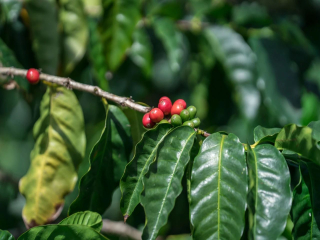
Following Cafe Review (Wechat official account vdailycom) found that the coffee tree in the beautiful cafe opened a small shop of its own. The main types of coffee trees are Coffee Arabica and Coffee Robusta. The leaves of Arabica are about 15 cm long. Robasda's leaves are long, soft-oval or pointed, and bright green in color. The Liberian species are not tolerant because of their poor flavor.
What are the characteristics of iron pickup coffee? what is the flavor? is it bitter?
Professional coffee knowledge exchange more coffee bean information Please pay attention to the coffee workshop (Wechat official account cafe_style) the main producing area of small-grain coffee is suitable to grow in the mountain area of 8001800 meters above sea level. If the altitude is too high, it will taste sour, and if it is too low, it will taste bitter. Small grains of coffee are mostly planted in about 1100 meters above sea level.

Introduction to the varieties of Yunnan Coffee Bean produced by Grinding and Calibration method
Although Zhu Kula is poor and backward, it has an inextricable bond with coffee. In addition to growing coffee all over the country, the villagers all have a tradition of drinking coffee: self-growing, self-grinding and self-brewing, and now men, women and children in the village have the habit of drinking coffee. The villagers here have a special feeling for coffee trees, even if the coffee beans do not bring them any economic benefits.

A brief introduction to the processing method of grinding degree and roasting degree of full-flavored snow vein manor fine coffee beans
Bolivia is not a big coffee producer, but the excellent altitude and climatic conditions of the La Paz Mountains make the coffee produced here excellent. Bolivian fine coffee is delicate, bright, sweet and aromatic, and is a typical coffee that makes people feel clean and relaxed. The coffee here has subtle fruity aromas such as pear, apple, apricot, orange and lemon. Taste malt and chocolate to

A brief introduction to the treatment method of grinding degree and baking degree of fine coffee beans in Xuemai Manor with fruit aroma
The market for Bolivian coffee: the coffee grown in Bolivia, in which Arab washed coffee beans are exported to Germany and Sweden, is not the best taste today, and the advantage of Bolivian coffee with a bit of bitterness lies in its high altitude and excellent varieties of coffee, where the traditional Tibica and a small amount of Kaddura are highly valued in the world market. Bolivia is not coffee.

A brief introduction to the treatment method of grinding degree and baking degree of fine coffee beans in rich and balanced Xuemai Manor
Bolivia is not a big coffee producer, but the excellent altitude and climatic conditions of the La Paz Mountains make the coffee produced here is of excellent quality. Bolivian boutique coffee is delicate, bright, sweet and fragrant. It is a typical coffee that makes people feel clean and relaxed. The coffee here has subtle fruity aromas such as pears, apples, apricots, oranges and lemons. Malt and chocolate on the palate

A brief introduction to the description of the flavor, taste and aroma characteristics of high-quality coffee beans in Xuemai Manor
The early Bolivian coffee was of low quality and the market was very poor. Usually the picked coffee fruit is bumped all the way to the processing plant after a simple peeling treatment. Due to the imperfect infrastructure, the traffic is underdeveloped. Coffee farmers have to overcome the rugged mountain road and transport the beans to the higher altitude area of La Paz for washing. If the coffee fruit can not be delivered to the processing in time

Cultivation conditions of three native species of coffee beans
Coffee is mainly divided into three categories: Arabica (Arabica), Robusta (Robusta) and Liberia (Liberica), but Arabica and Robsta are mostly in circulation in the market. No matter what it is, it has its advantages and disadvantages, and its purpose and use are not the same. There are about 40 species of coffee plants, but only coffee beans with commercial value can be produced.